
Aired on September 17, 2026 | 54 min watch time
Pattern Energy’s SunZia Wind and Transmission project is one of the largest renewable energy infrastructure projects built in North America: 916 wind turbines, a 551-mile HVDC transmission system, and more than 200,000 project documents managed across multiple scopes.
In this session, Pattern Energy’s Derek Price joins InEight’s Ryan Kerschen to walk through how the team kept documents, schedules, contracts, and change orders aligned at that scale — and what it took to build an information infrastructure that could keep pace with the physical one.
You will learn:
- Why megaprojects require a different approach to project controls
- How SunZia connected project teams, workflows, and data across functions
- How the project team improve visibility into cost, schedule, contracts, and change
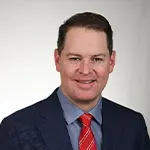
Ryan Kerschen
Vice President, InEight
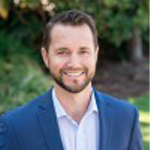
Derek Price
SVP, Engineering, Procurement, and Construction, Pattern Energy
Transcript
Adam Palant:
Hello, and welcome to this webinar, Delivering Energy Infrastructure at Scale: Inside Pattern Energy’s SunZia Megaproject. This event is brought to you by Engineering News-Record and is sponsored by InEight. Hi, I’m Adam Palant, Special Sections Manager at ENR, and your moderator for today’s webinar. Thanks for joining us.
Our presenters today are Ryan Kerschen, Vice President at InEight; and Derek Price, Senior Vice President of Engineering, Procurement, and Construction at Pattern Energy. Before we get started, please take a moment to scroll down and explore the webinar console. You can download handouts, click on the speaker images to view their bios, and submit your questions or comments anytime using the Q&A box. We will address as many as possible at the end. Today’s webinar is being recorded, and will be archived on ENR.com. And now I’m excited to turn it over to Ryan and Derek to kick us off.
Ryan Kerschen:
Excellent. Well, I’ll get started first. So good afternoon. A big thank you to Lauren, Adam, and the team at ENR for hosting us. My name is Ryan Kerschen with InEight. Early this year, InEight hosted our first ever Project Championship, so where people across the world had an opportunity to vote on some of the most ambitious, influential capital projects in the world. Pattern Energy’s SunZia project was ultimately voted the project of the year, and it also happens to be one of the largest renewable energy infrastructure projects ever developed in North America. So I think it’s a pretty cool opportunity today, not only to talk about megaprojects more broadly, but also to hear how Pattern specifically approached this project in scale and complexity.
So to help with that, we’re pretty thrilled to be joined by Derek Price, SVP of Engineering, Procurement, and Construction at Pattern, and to hear about some of his firsthand experiences. So Derek, thank you so much for being here. And maybe to get us started, just give us a quick sense of your role and what you do at Pattern.
Derek Price:
Yeah. Hi, everybody. And thanks, Ryan, super excited to be here. Thanks for inviting me. This is a topic I can talk for days on, but my role here at Pattern, I’ve been with Pattern for about 13 years now. My entire career has actually been in the renewable energy and generation infrastructure business. But yeah, as mentioned before, I oversee our project plant engineering, all of our capital procurement of all the equipment and generation equipment that we buy directly, and really the construction execution and commissioning of our facilities as we move through development and into construction execution, and then ultimately hand our projects off into our operations team after that.
Ryan Kerschen:
Excellent. So obviously inside of Pattern, you say SunZia and everybody knows what it means, but even in the marketplace, I think you say SunZia and most people know what it means, but the project itself has a long history behind it as well before Pattern ever decided to embark on this journey. So set the stage a little bit, so what is SunZia and how did we get here today?
Derek Price:
Yeah, I mean SunZia has gone through a lot of evolution through a couple of decades. Developing long haul transmission, it takes a long time through permitting and overall right of way acquisition. It originally started out as an idea and a concept that solar in the Southeast or Southwest is you get this kind of duck curve mentality where you have excess solar during the day, but our vision here ultimately was we wanted to levelize that curve where there’s a high resource of wind in New Mexico. And that is coincident to solar in Arizona and California, particularly where the wind is coming up in the evening hours, it’s ramping up. So there was value to bring that wind energy into California. Transmission was just the problem, and it continues to be a big challenge for the industry, and how do we move electrons efficiently and effectively around the grid.
It originally started as an AC line by the previous developer, and as we got more involved as Pattern, we came up with the idea that we wanted to convert it to an HVDC line so we could ultimately get more megawatts through and out of New Mexico and really into California and into Arizona. It is comprised of 916 wind turbines, 3.6 gigawatts of generation. There’s a 550-mile transmission line, as you can see in the poster here, that extends through New Mexico and into Arizona right outside of Phoenix. And from there, we’re able to deliver power into California, and we’re also delivering a significant amount of power into Arizona as well as the needs and the demands have also grown there.
It’s quite the massive project, and it’s really a, in my mind, it’s one thing to build these projects, it’s another to design and commission and to actually get this to operate at this scale. There are not any other significant HVDC projects that have been built like this so it was very unique in that matter, and also to the environmental impact. We are very conscious and stewards about the environment and we highlight this here too because we relocated and replanted over 15,000 cacti, sensitive species, and really took that at the forefront to be good stewards of the land that we have the privilege to work on and operate this facility. It obviously took a massive workforce to get this done over multi-years, but the construction of this was really a small slice of the pie. There was so much hard work and dedication that went into just developing and getting it to this point here today.
Ryan Kerschen:
So you mentioned the moving it from Arizona to California and some of the complexities there, maybe within your role, whether it was either procurement upfront or towards the commissioning side, I mean, were there things you hadn’t had to address before with that kind of multi-state, huge spread of the project?
Derek Price:
Yeah, there was a lot of unique aspects around just if you think about communications and data, right? You have to be able to, you have day ahead forecasting, you have to be able to communicate with Cal ISO, you have to be able to communicate with the utilities that you’re interconnecting into so they understand the system and how it’s working to be able to adjust generation profile, different reactive power requirements, that you need to ensure that their system is also stable, right, as we’re injecting power into their grids. And then there’s a number of just transmission rights that you need to be able to move the electrons across the system from one party to the next, a lot of utility upgrades that need to be completed. And then a lot of just unique compliance requirements. Every state has different requirements around whether it’s environmental, permitting requirements and such. But I would say the biggest thing was the telemetry, and the data that you need to be able to share from how the plant is operating, and ultimately keeping the grid stable at the same time.
Ryan Kerschen:
Awesome. So before we get into systems and workflows and things, I know from the handful of times we’ve already been able to talk, I know you’re pretty passionate about the human side of the equation. And I think you just mentioned that you had roughly 2,500 people in the field at peak across obviously multiple states, so tell me about a little bit about Pattern’s culture, culture of safety, and then really just about the men and the women who actually built this thing.
Derek Price:
Yeah. I mean, at the end of the day, this is really about the men and women in the field that built this project. I mean, what was accomplished out there is really hard to describe unless you saw it firsthand and you were there on the ground with them. But it all starts with safety for us. I mean, it’s a core value. We truly believe that a safe project is a quality project and then ultimately you will deliver on your schedule, your budget. Those are the secondary effects of safety and quality.
And it’s something that’s very near and dear to my heart because it’s where I started my career as well. It’s how I worked my way through college. I was an equipment operator and a laborer working construction in the field. I started my career working for a general contractor as a field engineer in the renewable energy space where I was spending a significant amount of time in the field with the crews, learning about the work, helping build coupled with time in the office. Now, over time, I’ve spent more time in the office than I do in the field unfortunately, but my happy place is being out on site, seeing all the work get complete, the smell of the dirt and getting pushed and moved and the equipment moving around. But yeah, at the end of the day, it starts with safety for us.
Ryan Kerschen:
Yeah. I guess I can relate to that too. Early in my career I was an engineer at a power plant and there’s certainly lessons that you learn there even as your job transitions more to the back office or the office that they never leave you, and they don’t change how you approach your day-to-day job today as well, I would guess.
Derek Price:
No, it really doesn’t, and you want to be able to communicate with everyone. And that was probably one of our bigger challenges. And one thing we were very intentional about, how do we communicate across people working across multiple states? If there’s an issue or a safety event, how do we share those lessons learned immediately across the workforce with a couple thousand people in remote areas?
Ryan Kerschen:
And not to get directly into systems, but that’s a really good point. Even safety at scale is an information issue and there’s value and that’s why some of those systems exist is to have as close to real-time safety information as well across even a geographic span.
Derek Price:
Yeah, no, exactly. Information is key and you have to be able to get that out to the folks in the field as soon as you possibly can because it’s core to us to make sure that they’re going home safely every day.
Ryan Kerschen:
Yeah. So when Pattern really decided to take the plunge and go do SunZia, I think you mentioned one of the first things wasn’t necessarily engineering, it was those early leadership discussions and what needed to change to run a project of this size and of this scope. So maybe take us into that conversation a little bit, what’d you have to change? How did you make the case, et cetera?
Derek Price:
Yeah, a lot had to change. We had, prior to SunZia, had built another project, not quite to this scale, but it was larger than anything that we, the first kind of multi-billion dollar project. And we learned a lot from that project and how we needed to change to be able to deliver on something like SunZia. And it was really more about our operating model, our business model. How do we have to be structured as a team? What talent do we need? What are the resources that we need to be able to execute on something of this magnitude? I mean, traditionally in our past, we would build these what we would call singles and doubles, these one to 200 megawatt wind projects or solar projects or short transmission lines where you had one contractor, one supplier, and for lack of better terms, you had that single throat to choke on a full EPC wrap for a project.
SunZia, we had 30 plus major contracts, and we had multiple different contractors and suppliers of equipment and technology. So we effectively as Pattern became that construction manager. We were the ones that had to really wrap all this together and manage all the scope interface and the interdependencies that are created on something of this scale so that we were taking on more risk, and we had to come up with a better model to manage that risk, whether it was contractual risk or safety risk or schedule risk across the board. So that was one thing we had to really expand and that really drove us, how are we going to manage all this information? Do we actually have the right back office infrastructure to support this?
There’s the people side, then there’s the system side of how do you manage that risk? How do you communicate? How do you ensure you’re meeting all of your contractual obligations and the flow of information that is required with hundreds of thousands of engineering documents and studies and completion certificates and quality documents? It was a little bit overwhelming right away, but we really had to get buy-in at the time from executive leadership, from our board on how we were going to approach this and that was going to change our business model and it did drastically.
Ryan Kerschen:
Yeah. One thing we obviously see a ton of at InEight is the change management that goes along with growth, with scale, with adoption, those types of things. And I think, like you mentioned, executive leadership at times is really okay with organic growth, like let the best process win, let’s see what happens. I mean, maybe in something like this, there’s a time for a thou shall point of view on certain things too. I mean, was there a time for a more like you meant direct, these are important decisions we have to make now and charge on even if there’s a little bit of an unknown there?
Derek Price:
There is, right? I mean, a little bit of an unknown, but when you’re asked to take on a project of this scale, there are certain things that you know you need based on your experience to deliver on it. And one thing, it takes a little bit of humility as well. There are things that a lot of us just hadn’t done, and that goes back to the people and focusing on bringing in the right people that have actually built projects at scale and not falling in love with how you’ve performed in the past because you will not succeed if you assume your past successful work going forward. And that was really the mentality that we took that we had to change and it took a lot of buy-in from everyone to be able to get over that hump. And once we did, we were able to really start to see the fruits of that labor come through, and we did really throughout the execution of the project.
Ryan Kerschen:
So you obviously weren’t juggling one thing at a time, right? And then I know you had some other backend systems you were working through, and you mentioned the 30 throats to choke, or how you were going to get all that. I think part of the reason you started then was maybe in the doc control space. So is that part of why did you start there? What did that get you going? And then what was after that? It was a three-part question. Let’s just start with why start there, and what did that get you?
Derek Price:
Yeah, based on our previous experience coming up with this, we had, I’ll start with the document control side. We were using a document control system that they were sunsetting what they were doing, and we weren’t exactly, it wasn’t scalable. We didn’t believe it was scalable in our mind. So we went out to the market and started to research and explore and analyze different platforms. We knew we needed to start with a document management system. It was really the foundation of everything that we do, engineering documents, studies, commissioning plans, execution plans, technical specifications, contract documents. That is really the core of everything that builds up our projects at the end of the day. And we share so much information externally, so we needed a good robust system and a plan to be able to track RFIs and submittals and streamline that side of the business, try to take some manual processes out of it.
And we’ve landed on InEight as that platform, but also, at the time we were, as a company, had made a decision as we were scaling and growing, there were other systems that needed to change. We needed a new ERP system. So as that was going on in parallel with SunZia, we had to take a strategic approach on how we move forward with implementing specific modules. And it was an easy decision that we needed a document management platform that was going to be fit for purpose and fit for something at the scale.
Ryan Kerschen:
Yeah. And doc control in and of itself maybe isn’t always considered the most exciting thing, but at times it’s a discipline all into itself. And I’m just guessing that doc control at the beginning of SunZia is different than the end of SunZia, and it’s probably different than what it’s going to look like on your next project.
Derek Price:
I mean, that’s right. I mean, our end customer is our operations team, so we ultimately will be turning over all this documentation to our operations team. So it is so critical that they’re able to find the information that they need quickly if they have an issue that they need to resolve, they need to see an electrical drawing, or a structural drawing, or they need to find any NCRs that we may have had, or corrective actions during construction. So we are just one of the users of it, so we had to keep in mind the ultimate end user for us, which is our asset management, and our operations team that need to be able to get to information quickly.
Ryan Kerschen:
Absolutely. So maybe looking at another aspect of that, so you did mention that SunZia almost had two unique infrastructure systems, and they probably could have been projects in and of themselves with the wind and the HVDC. And then you have the scope and the geography and multiple contractors. Tell me, I mean, that’s a huge scheduling challenge. How did you work with the scheduling interdependencies there and what were some of the biggest hurdles that you had to manage?
Derek Price:
Yeah. I mean, I think, one, there’s several hurdles in that question, but I think the first one that comes to mind is you think about the level of activity that you have to perform. I mean, I think our project schedules that we had, I mean, these were 60,000 to 100,000 line items of scheduling activities amongst various different scopes and contracts. So we had to ultimately, as an owner, take everybody’s independent schedules, merge them together, run analytics on the critical path and ensure that we had all the scope gaps and the interfaces matching up together.
And the one thing that I super love about, it’s probably one of the things I love the most about the InEight platform is the ability to be able to run your Monte Carlo analysis and acumen views so you can really pressure test the health of your projects overall. And the other key thing that we talked about earlier is just information flow and how do you share impacts?
An impact that could happen on one end of the project will literally have an impact to someone or a team that’s 500 miles away. So how do you manage those interdependencies to be able to adjust priorities, or adjust the critical path across a large infrastructure that just spans hundreds and hundreds of miles? So that was definitely a huge challenge for us and a huge focus for us because we knew this going into it that we could have these impacts across the board and we had to be able to, one, have the visibility to it, understand and analyze it quickly, and to be able to share that information so we could make the best business decisions possible that we needed to along the way.
Ryan Kerschen:
There just had to be, and I’m not asking for examples, but there had to be multiple times that you had schedules coming from contractors, from subs that ended up being either dependent on each other and they were in conflict. I mean, there had to be multiple times that that was just an ongoing task to keep that in as line as possible.
Derek Price:
Oh, yeah. I mean, there were, on a project like this, you have a ton of challenges. You have delays you need to work through, you have design issues, you have supply chain issues, delivery of equipment, and especially when you get to the commissioning phase, that is really where when you’re starting to put everything together and you have to start back feeding power from one end to the other, and you have one single transmission line that is going to then power up everything you need on the wind side. So you miss one foot of transmission conductor, and you have a system that doesn’t work, so absolutely.
Ryan Kerschen:
So shifting to cost a little bit, I know you started earlier on maybe the doc control and the schedule side, but obviously you had an estimate running, you had a thought on what you really felt the contract was going to cost, what the project was going to cost. The cost control activities had to start pretty darn quick. So for a scope, an estimate of this size, what did you do, or what did you learn about cost control as you started to take this on?
Derek Price:
Our cost control function and ability to have that visibility into cost and forecasting was taken to extreme heights on SunZia. It was an $11 billion project, and when you have a project like this, it’s a sink or swim as a company or as an organization type of project. And we had to be extremely disciplined in our cost controls. We had large cost controls team. They’ll tell me it wasn’t large enough for SunZia that they could have used more. And it’s not only just managing the construction CapEx too, it’s all the other external obligations that we have, whether it’s landowner payments or environmental work or legal support. So we had to create a lot of discipline and discipline and understanding what our costs were, what our actual costs were, what our forecast costs to complete were.
Teams had to think differently about risk, and how do you assess that risk? How do you put a dollar value to that risk? And some of these teams were just not accustomed to that type of rigor. So having a strong, and some of the best cost controls functionality and teams really were really, really integral in helping us make good decisions on a daily, weekly, and monthly basis so we could move, if we had to move contingency around, we could move contingency around. If we had to make some adjustments and reforecast costs, all of that was at our fingertips.
Ryan Kerschen:
So you mentioned before when we were talking about this that there’s all the internal work that goes into the cost control, but there’s also an educational and informational aspect too for folks that either may have not done that or for maybe even the leadership that really needs an extra level of visibility. How’d you build out the framework that provided that confidence as well and that external, even if it’s an internal, external view into the numbers?
Derek Price:
It’s a great question and it’s one that I always grappled with along the way. It takes a lot of trust in the people that are helping manage the budget and tracking it and forecasting. The first thing that comes to mind is the proof is always in the pudding when you come to project closeout at the end of your project. And we project finance these projects, so there’s a construction loan and then like a traditional mortgage, you term convert at the end. And when we got to the end, all the numbers matched, or they were close enough. So that really proved out the value in having, I guess, really having a good cost control function in a system to be able to do that. And it’s also just a lot of discipline and communication with everyone, and an openness on vulnerability of what are the risks that you’re trying to manage and how do you approach managing that risk and overcoming it and mitigating it at the end of the day.
Ryan Kerschen:
Yeah. And you bring up risk there, and that’s something that you brought up for me and that I’ve thought about a little bit since then. You did some back of the napkin math when we were talking about, I think for me it was the value of a decision at SunZia, the cost of a decision at SunZia. And I’ll let you do the numbers, I won’t do it justice, but talk a little bit about risk and what that means for not necessarily the speed, but the speed/quality you need when you’re making a decision.
Derek Price:
Yeah. I mean, those who are in the construction industry, they know time is money, and the speed of which you need to make decisions is paramount and it’s super critical. My view is always the quicker you make a decision, whether it’s right or wrong, you know whether it was the right decision or not. In something like SunZia, where you are really, it was about half a million dollars an hour is really our burn rate on something like SunZia over a course of two and a half years of construction. So there is a time value that I always tie to making a decision and the lack of making a decision is very costly, but having the information to be able to make the best decision possible is really the tricky part.
We can all make decisions based on gut and intuition and experience, but having the ability to assess your schedule, to assess your scope, to assess your budget that you have in real time, that’s the real critical thing. Unless you really understand where you are from a scheduling perspective or where truly you’re at from a scheduling and a budget perspective, it’s really hard to make a decision, or hard to make the right decision. Do I pay to accelerate this scope? Do I have the budget to accelerate? Can I slow this one down while we work through a technical challenge and will that have an impact on our critical path? And if it does, do I have the ability to then accelerate after we work through the technical issue? So yeah, that was really humbling to me as we were going into SunZia, as I looked at our burn rate on an hourly basis, it really helped put into context the criticality of having good quality information on a real-time basis to make decisions.
Ryan Kerschen:
Yeah, something not related to this, but there was something my boss said to me, I think just last week. For certain tasks, it may just be important that you fail quickly, but for others it’s like there is some going to be value in getting that decision right the first time, and then how do you balance those things? But I think overall, even with the scope we’re talking about, Pattern was exceptionally close to their original schedule in hitting this thing.
Derek Price:
Yeah, I would say on the goals and objectives that we set out, we’ve met our expectations on the project, which is not something you see on projects of this scale. There’s a book out there, How Big Things Get Done, and traditionally it’s a multi-billion dollar project. It is in the low single digits that project does hit their schedule, does hit their expected budget. So it was a huge accomplishment for us for sure, and as we’ve moved into operations, something at this scale, we’re still learning how the system works and operates. But yeah, we are fully operational, which is fantastic, and we’re ready to do more.
Ryan Kerschen:
Awesome. So we’ve talked about some of the different pieces and aspects and that brings up that larger concept of just connected workflows in general. It’s something we certainly at InEight talk about a lot, but Pattern actually lived that somewhat on SunZia. So from your point of view, what did that mean to you and did it provide value and practice?
Derek Price:
Yeah, absolutely. I mean, we had a very ambitious goal when we set out on this journey with SunZia, and it was really to deliver and to prove to the industry that you could deliver a large mega infrastructure, clean energy project at scale, both on time, on budget and safely. One thing I forgot to mention earlier is we had nearly 15 million man-hours, working hours on the project, and a total recordable incident rate of 0.5, extremely low for something of this magnitude. But the scale of coordination, you talk about the connected workflows, we talk about the number of men and women that were physically working on the project sites at peak construction, 2,500. I think we may have got even closer to 3,000 during certain points of the project, but that’s just the men and women that were physically on site. The supply chain expands so much further than that.
You talk about the manufacturing facilities and all the workers there, all the truck drivers and the logistics of getting large pieces of equipment from across the globe, throughout the US, and into this specific area. And even within Pattern, we probably had 300 to 500 people at any given time just working on SunZia, whether it was on the finance side or legal side or our construction execution or development and our engineering and asset management and operations. It was a huge company focus. And how do you get people to march towards the same goal and the same objective and share that real time information because they also have stakeholders that they need to manage, our off takers, the utilities, if things are moving and changing around. So that was probably one of our bigger challenges. How do you keep everybody connected throughout something of this scale?
Ryan Kerschen:
No, absolutely. So keeping some of those things in mind, well, I don’t want to ask you what you do differently on SunZia, but what did you learn on SunZia that if you’re doing the next first of its kind project, what would you take into that?
Derek Price:
Yeah, great question. There are certainly some things that I would reinforce that you are paramount, a good document management system, and building that foundation. You have to be able to share information timely, you have to be able to track RFIs, submittals, create those workflows with internal and external parties. Really take a look at how you are currently managing your projects. What does your organizational structure look like? Don’t be afraid to seek advice and challenge your own way of working. That was one big thing I had to do. I really had to challenge my own self, and then take feedback from others. I fortunately had a lot of amazing people around me that had built large infrastructure projects that were giving good advice along the way and the challenges and the pitfalls to look out for. And then we did our best to build safety nets around those risks overall.
So I would not recommend trying to roll out an ERP system while also implementing a project management platform. Nonetheless, we did it, we made it work, but we had to make some changes and sequence things a little bit differently. And actually, we tried to, our intent was to have InEight fully rolled out before SunZia happened, but the business, you have to be able to evolve and adapt to changing business needs and focus on what your true priorities are as a company. And that’s why for SunZia, we initially out of the gates really focused on the document controls. So as the rest of the business was scaling and had to update our ERP system to allow that function to go, right, because we couldn’t hold that up as well. We had to get ready for the overall operations of this.
And also, our decision to move forward with something like InEight was truly a business need and a business decision. You can’t always let your IT dictate how you’re going to manage your business. And unfortunately, we have a great IT team that was supportive in the systems that we wanted to implement and deliver. Of course, they had some input on timing, right, like I just talked about because you have to create some of that interconnectedness, which is great. Our cost controls can integrate with our ERP system, so we can push and pull data back and forth on a go forward basis on forecasting our costs, understanding our actuals against our plan. And it takes time.
I would say the other thing is these systems take a little bit longer than you sometimes think to really plan out how it’s going to work. And you have to understand your own process too. You have to really document and define your own process before you can really successfully implement a new platform.
Ryan Kerschen:
Yeah, maybe that’s a good final point to make a little bit on some of these things is that Pattern moving towards a different system, towards a more broad platform wasn’t necessarily driven by SunZia, but it was something that was in progress and then here we are, we need to deliver, so let’s start prioritizing and get it there. What would be some advice to owners, maybe not necessarily looking at the next megaproject, but considering scale or growth or larger things, what would you have them look at on the maturity of their own systems and what’s going on with their own world that they might want to look at?
Derek Price:
Yeah, I mean, good question. I think you have to find a good partner in who you believe will work with you the best to create the system that you need. And you need someone that has some flexibility that can provide some customization, right? There are a lot of out of the box type of systems that you can implement, but they’re rigid and a little bit inflexible. That was the one thing that we actually really enjoyed, and still enjoy with InEight. There’s a lot of customization that you can do because not every size fits every single one. So you really have to find right balance of, one, creating some flexibility to be able to how you do your own business. But also, I just go back to you have to understand your own process too first. We’ve seen it quite a bit where you roll in, you want to implement a new program. The first question is, well, what is your process now? And so you really have to have a good documented process and understand what problem are you really trying to solve before you jump into something.
Ryan Kerschen:
We ask that question a lot, so absolutely. I think that’s right up against it for how much kind of time we had for the conversation piece. And I know we’ve got some questions that came through the chat, but before we get to those, one final set of thank-yous from me. Appreciate the opportunity from ENR, from Lauren, from Adam and the ENR team for hosting us today. Christina at InEight for all the help on the prep work, and for getting our slides moving today and the conversation ready. And obviously most importantly, a sincere thank you to you, Derek, for your time, your expertise and perspective, and for being willing to share that with us today. So Derek, thank you again. And with that, Adam, I’ll turn it over back to you.
Adam Palant:
Thank you both for a great presentation. We have received several great questions throughout the program, so let’s jump right into it. So the first one. Okay, here we go. How long has your company been using InEight, and do you use the full suite of modules or a subset?
Derek Price:
Good question. We started using InEight in 2022. We predominantly use the document management function I talked about, the scheduling module, the estimate module, the risk register and contract module, and we are starting to use the cost control module more. We continue to explore, do we want to use. There’s the field module, field management, the safety module. So those are ones that we haven’t fully used, but we actually do have the full suite of modules, but those are the ones we predominantly use as of right now. And as we continue to work through it, we plan on adding some more as we go.
Adam Palant:
Excellent. Do you have a screenshot of the dashboard or similar use that displayed that real time data? It sounds like a really great feature asset to have.
Derek Price:
I mean, I think it’s something we can definitely share. I don’t have something I can just pull up right now, but so.
Adam Palant:
No worries. How demanding and what are the major changes related to energy that is happening going to happen in the future?
Derek Price:
Oh, can you repeat that one again?
Adam Palant:
Sure. How demanding and what are the major changes related to energy that is happening and going to happen in the future?
Derek Price:
Yeah, the energy demand is something that’s changing very rapidly right now, especially really with electrification of homes, businesses, automobiles, and data center growth is a huge driver right now in the industry. So it is creating. I mean, we’re heading into a period of time, which we kind of call the golden age of electrification, and there really hasn’t been a large energy transmission build out in the US for 30, 40 years. And it is a big moment to reinvest into that infrastructure, to add the infrastructure, and also increase the amount of generation that is out there on the grid to meet these overall growing demands.
So I would say over the next five to 10 years, nobody really knows how long this will go ultimately, but we expect for the foreseeable future that the growth and demand is going to continue to grow. It’s going to put a lot of pressure on CapEx pricing. There’s already a significant amount of pressure on the labor market, the supply chain and manufacturing, your lead times are getting longer, your labor costs are getting a lot higher, and just the overall cost of building infrastructure, we are starting to see a significant increase in that.
Adam Palant:
Excellent. Thank you. The environmental commitments on SunZia included relocating roughly 15,000 saguaro cacti. How did you build something like that into an aggressive schedule without losing time?
Derek Price:
Great question. We actually started a lot of that work well in advance even before we closed our construction financing. We were out in the field before road building crews were getting in there to build to all these pads. So it was a lot of pre early works that we did before we really came in with a lot of the equipment, and just properly resourcing and planning for it ahead of time, so.
Adam Palant:
There you go. How do you keep contract commitments visible so change didn’t compound it to cost overruns across multiple states and years of execution?
Derek Price:
Our amazing contract management team. No, so when we execute any contract, we would run through every single contract with our legal team, with our contracts team, and ensure we’re pulling out all the obligations that we have as an owner. So that is visible to everyone, so we’re managing that throughout the project. And inevitably, there is a lot of change and challenge that you have. Differing site conditions, weather constraints, force majeure events.
Throughout SunZia, we had reciprocal tariffs that were hitting. I mean, we got hit from a lot of different angles throughout execution, and it ultimately comes down to having a good system to be able to manage and track all of this, and some discipline around how you’re managing this with your counterparties. Our partners on this project, it was so critical that we had strong relationships with them, and these projects don’t get built without having a lot of trust with the people that you’re working with. Contracts are contracts, and the words are the words, but there’s always areas of gray that you need to work through. So I would always strongly suggest that people ensure that they’re doing business with people that they trust at the end of the day.
Adam Palant:
Makes a lot of sense. Another one, what did you look for in the people you brought in for the controls team? What skills didn’t exist at Pattern before SunZia?
Derek Price:
I mean, we had a project controls team before SunZia, but I think what we really focused on were folks that had that good, I would call it construction accounting background. They were true cost controllers that had already had experience working for other firms. We pulled. Large infrastructure projects isn’t new, right? So you have the oil and gas industry and you have a lot of other industries that have very robust controls and contract systems. And those are some of the folks that I really actually leaned on quite a bit to bring some of that experience in and help enhance our processes that we had. So it wasn’t really developing from new, it was taking what other industries have already done, and integrating that into really our project and our processes.
Adam Palant:
Excellent. From an owner earlier in the journey, what’s the smallest first step that still gets you a real benefit?
Derek Price:
The smallest first step that gives you real benefit. The smallest first step, I mean, it may not be a small step, but you have to create alignment on your execution approach, and you have to have really alignment across the entire organization that in order to deliver on a project of this magnitude, or really any project for that matter, is you have to have clear milestones throughout the process because you’re going to run into challenges across the way, but you really have these drop dead dates that we need to mobilize by this date. We need to make this payment by this date in order to keep the train on the tracks. I would say a schedule, a fully built out schedule with key critical milestone dates so everybody is singing from the same sheet of music across your entire organization, whether it’s finance, development, our environmental teams, the legal teams, accounting, everybody has to be marching to the same tune.
Ryan Kerschen:
Yeah, and I’ll even add one thing on top of that, and only it’s because Derek said it earlier as well, don’t minimize the value of asking the question: what problem am I trying to solve? And writing down the answer. Whenever you’re starting on the journey, having some level of your processes and your goals documented makes taking that next step so much easier as well, so I’ll throw that one in as a little side note too.
Derek Price:
Yeah.
Adam Palant:
Wonderful. Well, based on the time, I’m sorry to say that’s all the time we have for questions today. Ladies, gentlemen, please join me in thanking Ryan and Derek, as well as our sponsor, InEight. If you have any additional questions, please email [email protected]. We are happy to help. When you exit the webinar, you will be taken to a brief post-event survey. We would appreciate you taking a moment to share your feedback as it helps us continue to improve our programs. Please visit ENR.com for the archive of this presentation and information about our other upcoming events. We appreciate your time, and hope you have found this webinar to be a valuable experience. Have a great day.


