
Aired on Wednesday, 4 March, 2026 | 1 hour run time
The gender gap remains one of the construction industry’s most critical challenges—and most powerful opportunities.
Research confirms that companies with strong gender diversity outperform financially, innovate faster, and experience higher safety and retention outcomes. Yet in 2025, women represented under 14% of Australia’s construction workforce, with fewer than 2% holding trade and site-based roles.
For the construction industry to thrive, women must be positioned to lead, influence decisions, and shape the evolution of culture, technology, and project delivery.
Join InEight and a panel of industry leaders as they share their lived experiences and discuss what meaningful progress looks like—both for women already in the sector, and the next generation entering it.
Topics will include:
- Moving beyond representation to influence: creating space for women in decision-making roles on projects and at leadership tables
- Driving culture change on site: what actually shifts behaviour, safety, and communication
- Best practices for attracting and retaining talented women in the industry: why women aged 18–35 are leaving construction—and how we reverse the trend
- Harnessing technology + digital skills to accelerate capability and confidence
- Finding appropriate mentors—how men can help
- Bringing your authentic self to work, without minimising credibility
Future-proofing our sector requires that we think differently and diversify who gets to lead the change. Please join us for this important webinar.

Natalie Takacs
Director, Reporting, InEight
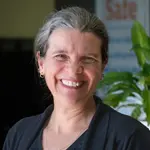
Ansonica Botha
Programme Controls Manager, Hastings Council, New Zealand
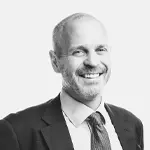
Marco Fontana
Managing Director, Ghella
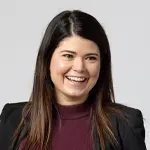
Natalie Ambroso
Principal Engineer, GHD
Transcript
Natalie Takacs:
Hello, everybody. Welcome to our InEight March 2026 webinar, Rebuilding the Culture: Women Leading Construction’s Workforce Transformation. My name is Natalie Takacs, and I am going to stop messing up my words here. I serve at InEight as a product director over our reporting products. I handle a lot of roadmapping, research, technology, investigation, and work very closely with our dev team. But today, I’m stepping out of that box and I’m going to be moderating a very esteemed panel of leaders and change makers in the industry on our webinar today.
A couple of housewarming, housekeeping things before we get started. Don’t forget to mute yourself. You should be muted on your way in, and let us know you’re here by utilizing the chat feature. So there’s a chat feature over on your right or left-hand side, and then there’s also a Q&A feature. So this is separate than the chat feature. Make sure you use the Q&A feature to enter your questions so that we can get them sorted in and potentially be able to ask them live today. Lastly, we would love to see your reactions, so don’t forget to utilize those live reactions, and fill out our survey at the end.
Like I mentioned, my name is Natalie Takacs and I am on the InEight side, but we have three phenomenal panelists with us today, and I’m going to send it over to each one of them to introduce themselves and to talk a little bit about what inspired them to join the construction industry. So Marco, I’ll start with you.
Marco Fontana:
Thanks, Natalie, and good afternoon to everyone. I’m flattered for all the nice words that Natalie shared in the last minute, and I’m very happy to represent Gala, and of course, giving my perspective on this interesting topic.
So a little bit about myself, trying to really keep it brief. My name is Marco Fontana. I’m the managing director of Gala here in Australia. Been so for the last six years and counting, been with the company a bit longer. Gala is a global multinational infrastructure company handling … Mainly our expertise lies in underground, and we’ve done a lot of large jobs here in Australia, of which I’m very proud.
In terms of my trajectory, I come from a very different background. I’m not an engineer, so sometimes I get the weird look when they say, “What you’re doing in construction?” It was actually probably the reason why I ended up in construction I think in hindsight was probably because I should have done engineer as a start. My dad always told me that, and I went on economics, did a living out of it, but I effectively found that the finance side of things really didn’t work out too well for me. I missed something a bit more practical, seeing the results, the practical results of it, and hence circa 10, 11 years ago, my career started shifting from finance to construction. That’s how I entered into the construction sector, more through, let’s say, the finance funnel, but now, I’m fully vested into the construction.
Love the industry, love what you can do on a day-to-day life. Every day, I take the Sydney Metro here to go to work. I feel so proud that we’ve been part of it and changing the life of so many people on a daily basis, and that’s what keep me going. And I look forward to have a good exchange of ideas on how we can increase women participation in this wonderful industry. Thank you.
Natalie Takacs:
Excellent. Thank you, Marco. Ansonica, let’s go to you next.
Ansonica Botha:
Good afternoon, everyone. I’m Ansonica Botha. I’m working at the Hastings District Council in New Zealand. I’ve been here for coming up 20 years. Started with my education in civil engineering in South Africa and moved to New Zealand 20 years ago. I’ve only worked at Hastings District Council in New Zealand, but across that time, I started as a project manager and had the opportunity to work across three waters, transportation, aquatic facilities, seismic strengthening of our opera house, a whole range of different things. At the moment, my role is still relatively new to me. I only started in September last year as the program controls manager for our recently set up program delivery office.
What interested me in this industry is originally, I was really interested in psychology, and I didn’t think there was much of a career path there so I thought, well, what else am I good at? And I was good at physics and mathematics, which led me to engineering. And I like the idea of building things. I love the sites, the smells, the big cranes and trucks and all those exciting things, but also the fact that we’re building generational infrastructure for our communities. But what I found was being in engineering gives you the opportunity to build teams, because a lot of the success of projects depends on how we relate to each other and the relationships we build across our teams. So that’s where I get to live my passion for psychology, is in building teams that work well together.
Natalie Takacs:
That is a very unlikely connection that you made, but it makes a lot of sense. That’s so interesting. I love to hear that. Thank you so much. And then finally, I’m a little biased, but I love your name. Natalie, let’s go over to you.
Natalie Ambroso:
Thank you. I’m Natalie Ambroso, and it’s really great to join today from the land of the Turrbal and Yuggera people, the traditional owners in sunny Brisbane. I’m the property and building market leader at GHD in South Queensland, so I have carriage of our business here, around 150 architects, engineers, project managers, and scientists. And we get to build and design cool things every day, such as defense facilities, transport facilities, work in the civic community, and justice sectors, health, education, and more. So it’s really cool to be right from sketching something on a piece of paper to seeing it come out of the ground.
I started my career as a structural engineer in 2008, so 18 years in the industry now, working from designing now through to leadership. And last year, I was recognized as Consult Australia’s future leader, which was a really exciting career highlight for me.
I was attracted to join the industry as I actually grew up on a rural farm property, and as part of farming, there’s a lot of problem solving, a lot of creativity, a lot of resourcefulness required. So we’ve got sort of dams and windmills and machinery and just vegetable patches, farms. There’s all sorts of pieces that go into that, and I really loved working to find solutions when things went wrong.
I also had an auntie that was a structural engineer, and I think we’ll spend a bit of time today talking about the visibility of role models in the industry, so that helped for me. I was able to participate in some summer camps through school during high school, and that helped reinforce for me not only that I enjoyed the problem solving and the work, but I also came across a lot of like-minded people, and knew that this would be a place where I would enjoy a really rewarding career.
Natalie Takacs:
That’s really funny, you mentioned a lot of what drew you to the industry was around problem solving. My husband is a mechanical engineer and problem solving is one of his favorite things, and he talks about how he loves to solve problems in his job all day long. So I find that to be a very common element when I talk to folks in the industry, that finding unique, challenging problems is super enticing to just jump in and try to solve, so that’s really cool. I wish I was as creative, however, I’m not.
But I would like to jump into, so we talked a little bit about what brought you to the industry. I want you to now expand on what kept you in the industry. What was it that you loved about being in the industry? And then on the flip side of that, I also want to go into what was an identifying moment for you when you saw that change needed to come about?
So I didn’t know if anybody wanted to start. I’d be happy to randomly select one of you.
Ansonica Botha:
I’ll start. So what kept me in the industry is that no two days are the same. There are so many different pathways you can explore, different things you can learn about, different roles you can explore in terms of the teams that make up these projects, different areas. Whether it’s vertical build, underground, so many different things.
When I did my studies, we had 140-ish people starting, and there was only four women in that group, and only two finished. So that’s a significant shift from the type of numbers we see today, especially in New Zealand. I don’t know what the numbers look like in South Africa at the moment, but I’ve learned a lot about how having diverse people from different cultures, different backgrounds in a team really gets you to a better solution. And like was mentioned about problem solving, a lot of engineering is problem solving, and the wider the base of input, the better solution we can come up with.
Natalie Takacs:
I think that’s great. I very much agree. Marco, any comment from you on why you’re still in the industry and what has made you believe that change is needed in the industry with regards to support and participation for women?
Marco Fontana:
Yeah. I think I mentioned a little bit in my intro of course, the fact that I’m not an engineer. For me, it’s basically a never ending process of learning in terms of all the technical solutions and things, and I’m amazed of the things that we design and build, and effectively also then seeing it effectively being pushed forward when they’re actually built at the end, so that’s definitely something I like.
The other thing, which I think is very peculiar of the construction industry, particularly on the space where I work, which is infrastructure, is the concept of the tender and the award of the job. We spend so much time, effort, money, resources on putting forward the best options and tenders to the client, and that element of euphoria that you have when you effectively are awarded a tender after sometimes, honestly, it’s two or three years of work if you add the EOIs and everything, it’s so inebriating, it’s so fulfilling that I think it keeps me going every time and it makes up for the time that you don’t win unfortunately, which are equally, on the flip side, difficult, but that’s something really nice about this industry that I love.
And in terms of change, I think that the moment in which it was pretty apparent to the industry that there was the need for change, I know it’s not a nice moment to remember, but COVID in terms of the construction industry was a big catalyst for change. If you remember, back then, the construction industry kept on going and going and going, even when there was lockdown, as a specific industry that had to go ahead, and then all of a sudden, we had to stop. And I think in that moment, a lot of people start thinking how potentially, something that was of course externally driven could improve productivity. And a lot of the discussion there are still part of the agenda. Like for example, how we increase flexibility, how we increase productivity in the job site, how we increase women participation in an ever expanding pipeline. So I think that was the moment in which I really thought that the industry was ripe for change, and that we had to do something to fix it.
Natalie Takacs:
Definitely. Yeah. 2020 was not a great time, but definitely a big learning curve and a significant experience if nothing else. Natalie, any comments from you?
Natalie Ambroso:
Yeah. I think what keeps me in the industry is just doing good work with good people. In construction industry and engineering, we’re genuinely making a difference in the community every day, and when you can really connect your input into that, it’s really rewarding. At the same time, I think we all love what we do, the creative process, the problem solving, the learning, and the really diverse career paths that we can take, so you never get bored in the construction industry, so that’s what keeps me here.
In terms of the need to change, if I even just rewind back to my first year out of uni, which is 2008, we had a construction industry that really wasn’t made for women. Hopefully, we’ve got time for a few little stories. I’ll try and keep them brief. My experience going out to site, which was pretty regular, like every week I’d be out once or twice looking at something being constructed, and there was basic considerations like planning bathroom breaks. Okay, it’s a 45-minute drive. Where is the nearest service station to this site? Because quite frankly, trying to find a bathroom on site was either not possible or pretty terrifying, so you just couldn’t assume that that’s a facility you would have access to in a way that you’d feel safe to use it.
And then there was a choice of interior decorating inside the site sheds. I’m not sure if it was budget constraints or something, but there was a lot of pinups out of the magazines all over the sheds that I kept coming across. And there was this one core memory that I have where I was left alone inside this site shed writing my inspection report, so I ripped down Miss January through to Miss December and put them in the bottom of the bin without saying a word. So that’s the site experience.
I think inclusion in my office in engineering looks like me pretending to like football so that the boys included me in their highly inappropriate email threads. And look, it was all in good laugh at the time, but it did reinforce to me that change was needed, but I think also possible. And while now, I can say them with a little bit of jest and they might sound like shocking experiences for someone to go through in their early 20s in a workplace, I really applaud the bravery of the directors of my company not to hold me back, because you can see how it would have been a really easy decision to think, “Well, we won’t send her to site because we want to protect her from these experiences.” But then how can we create and perpetuate change if we aren’t brave enough to start to challenge the system?
Natalie Takacs:
Love that. Thank you for sharing. Keep the stories coming. They’re so wonderful, and I’m sure very relatable. Thank you for sharing that. I’m trying to imagine what I would have done in that situation. That’s shocking.
That’s a really nice pivot, and maybe we’ll start with you, Natalie, on this next question. So culture at an organization is incredibly hard to change. It’s more of a fixture of a company. It takes a long time to curate and an even longer time to change. So what in your experience have you seen over time shift in these situations? So you mentioned the decor in the trailer. Have you seen changes? I understand your role has changed over time, but have you seen change made there?
Natalie Ambroso:
Look, I’d like to think we don’t come across it today, and even reflecting for this panel, Natalie, wondered, did those posters ever go back up in that shed? Did they go back up or was that silent protest enough to cause reflection that, “Hey, maybe this isn’t appropriate anymore.” Look, I think we’ll get it wrong. We always get it wrong before we get it right, and acknowledging that, I think, we might get it wrong, we reflect that we’ve got it wrong, we do it differently next time, that shift in behavior ultimately causes shifting culture. So it’s going to be small things, but it’s the small things that will shift the culture in the long term.
Natalie Takacs:
I love that. Small, manageable pieces. I do want to actually shift over to Marco now. So Marco’s organization, Ghella, they have a 30% participation rate of women in their workforce. Now, the national participation rate of women in the construction workforce in Australia is 14%. So obviously, at Ghella, they’re doing something right, and Marco, I want to talk a little bit more about some cultural change you’ve seen at your organization. What are some things, maybe small steps, as Natalie alluded to, that have driven change at your company?
Marco Fontana:
Thanks, Natalie. Look, first of all, I guess I take the accolade, but I think it’s also fair to our fellows, construction companies and partners in many of the jobs, is that of course, there is an element of how Ghella operates. So of course, we’re a very specialized contractor, so we do have a slightly lower percentage of blue collars in our workforce, which explains in a way a little bit these good numbers. And that’s not to take away anything that we do very well here and which I’m going to touch upon now, but I think only to set a little bit the scene.
I think I agree with Natalie. The first concept is the small steps, and it’s also about the good example that you give when you do these things. So in order for us to be able to beat the average, the national average, I think our recipe was fairly simple. The first thing that you need to do is create an environment, a lawful environment in where women have the exact same rights to operate and to participate than men. And of course, it’s easy to say it, but we all know, the construction industry by many means has this reputation of being a little bit more of a machoist industry, and it comes from a long time back. And in certain cases, it’s also not justified but explained because some of the works that have to be carried over, of course, there’s a lot of physical element behind it. But I think that the industry has moved a lot from that and there’s a lot of machineries and other things that allow most of the work and services that are provided to be gender equal, if you want.
So the first element is, of course, creating a lawful environment to protect women, and what do I refer there? I refer, for example, to policies. It could be easy to think by the fact of reviewing the policies, ensuring that those are shared in the organization by the leadership so that all the organization can see how important are those leadership. Being, of course, very, very decisive in managing all the issues related to, and I’ve been speaking a lot, sexual harassment, sexual related matters that are very important in this industry and that are very top of the pops now with everything that happens with the Building Bad inquiry that has been going on in the last couple of years. So point number one is ensuring that there is the basic environment for women to have a successful career.
Then of course, there is the small things that Natalie was referring to, which is trying to do the right thing in the things that are more critical for women. We all know, for example, that throughout the life of the women, mentorship is one of the most critical parts, because of course, the personal element comes within the professional side a lot, because it’s something that it’s a big undertaking, and a lot of it falls under the women in these cases. So we’ve been taking a very pragmatic and proactive approach, listening to the people that were working with us, or what are the steps that we could do in order to improve that specific part?
And things could be extremely simple in terms of, of course, where possible, ensuring that element of flexibility for all types of matters in that period of life in which the women has also other priorities to look after which is not the professional part.
And then I guess the third thing is, the most important part is the culture of the company, and hence, I was very skeptical on marketing this part of what we’re doing, simply because I believe that word of mouth, it’s how, particularly in the works that we do, we generally arrange works in big joint ventures in which we are with other companies, so our employees share the workflows or the project site with other companies, and they talk. They talk about, oh, how this company is entering this, what type of flexibility you’ve got, and I think that’s the best type of advertising you can get, when it’s people within the company that goes out and say, “Look, I like Ghella because they do this and that,
” and rather than being very vocal. But there is also the last bit, which is of course, we like to let the market know what we’re doing. There is a more larger things that we’re doing, like in our jobs for example, Suburban Rail Loop in Melbourne will be the first job, channeling job. We’ll have all women TBM crew, so there’s going to be more than 16 women. We’ve already done 800 interviews, 16 women that will manage for the first time at TBM, one of the shifts of the TBM.
And then there’s a lot of other things that we do as Ghella or as an industry through Australian Construction Association, with NAWIC, trying of course to promote as much as possible the ability to women to join this industry. Because as I mentioned when I was invited to do this webinar, I think this is not because we like to do it. It’s simply because it’s a business necessity with such a big pipeline now. We cannot do without a decent participation of women in this industry.
Natalie Takacs:
That’s awesome. When you’re talking about half the population, it’s a lot of ideas and a lot of creativity that could serve as, I don’t know, just diversity to help move you forward. Ansonica, do you have any cultural shifts or agree with the small moves make a big change?
Ansonica Botha:
I’ll just jump onto what Natalie said about the toilets. I don’t get the opportunity to go out to site that often anymore, but just before Christmas, I did go out to site, and they actually had a girl’s only Portaloo with a sign-up, and they had the male one, and they had a joke, I can’t remember. But I actually took a picture and sent it to my family and said, “Look, they’ve got a girl, Portaloo outside.” But it’s the little things, and I don’t think we can underestimate the value and the example of what leadership sets, in terms of policies but also in terms of their day-to-day interaction, the conscious or unconscious messaging they’re sending out and the way they talk about initiatives or ideas or people, giving women space in meetings to talk, because sometimes … And I’m an introvert as well, so it’s really hard to jump in there if there’s not space for me to talk, so it’s so important the example that is set.
What I’ve actually found in my career is it was easier to get acceptance when I was more onsite and with the site people. I’m actually finding it in a way harder to have a voice as I move up in the council, so it’s different and it’s interesting.
Natalie Takacs:
That is an interesting point. Do you have any thoughts as to maybe why that is? It’s okay to say if you don’t. I know I dropped that question on you.
Ansonica Botha:
I think it’s something that I’ve noticed more recently, that I’m like, “Oh, something’s feeling different. Why is it feeling different?” And I’m still trying to figure it out myself, but it’s something that I didn’t experience as much in some of my other roles.
Natalie Takacs:
That’s really interesting. Well, so in the United States, we use the phrase, “Nothing good ever comes easy,” so it’s really encouraging to hear that you all and your organizations are fighting the good fight to bring support and representation for females in your workforce. So I want to take that opportunity to pivot to we do talk a lot about representation. What exactly does representation mean to you? What does that look like? Is it females in leadership roles? Is it purely just increasing the number of females you have in your organization? Let’s talk about what that looks like to you personally. Ansonica, if you want to start.
Ansonica Botha:
My own personal way of looking at things is people are people and I don’t see … I try … Well, I don’t believe it’s unwise, but I look at who’s the best candidate for the job. And as a woman working in the industry, I don’t want to be picked for something just because I’m a woman and to bring up the women’s numbers. I want to be picked or included in the team because I’m genuinely the best candidate for the job, so that’s the way I approach how I make up my teams, but it is also about making it a welcoming space for everyone.
Natalie Takacs:
So from your perspective, it’s more about creating the space for people to feel comfortable in?
Ansonica Botha:
Yes.
Natalie Takacs:
I think that’s great. Natalie, any comment from you?
Natalie Ambroso:
Yeah, sure. Representation, to me, if I think about why it’s important, we’re all trying to navigate the decisions we make to live our best lives, so as we’re doing that, we’re looking for examples of if I stay on this trajectory, in 10 or 20 years, am I going to live the life that I’m wanting to live? Can I achieve what I’m wanting to achieve? And role models and representation is a good way for us to test and engage that. So we’re thinking, okay, if I want access to the great technical leadership roles, to the organizational leadership roles, am I seeing people like me who’ve done a career like this, who’s achieved that, that suggests that I’ll also be able to achieve that? If I want to be able to manage my caring responsibilities, whether I’m a man or a woman in this industry, am I looking forward and seeing role models who are able to both have a really good career and also have flexibility to manage those responsibilities?
Are the people who look like me enjoying it? Are they actually having a good experience in this industry and in this career? And these are all systemic and cultural organizational issues. These are not women issues, and so I think that the real influence in this is at organizational level, and representation does matter. It’s not about whether you’re that person that is representing it. It’s that you can see that you can live a good life like that.
I think the great news for this industry as well with social media and the evolution of LinkedIn is a few role models can go a lot further than they used to. There’s so much broader visibility of representation, of role models, of examples that we can draw on and follow and be inspired by to build our careers, and I think that’ll be extremely helpful for the construction industry. But I think just don’t underestimate. This is not a women’s problem. 40% of working people are parents. That’s not 40% women. That’s, say, 20% who are men, 20% who are women. Parents are both male and female, funnily enough, so men and women need to be able to see role models that can balance those caring responsibilities.
Natalie Takacs:
I think, and Marco also talked a little bit about becoming a parent, it definitely affects both men and women. And I think I know, sometimes, my kids end up getting sick and I have to, in the middle of the day, take them to the doctor or whatever comes up. Knowing that my male colleagues feel that they can share those kinds of experiences as well, that makes me feel so much more comfortable. So that is a different kind of representation than I really have thought about before. So it’s not just, “Oh, I’m young. I see more tenured female in the industry.” That could be me being able to see myself, but it’s also seeing yourself in your peers and feeling, again, going back to Ansonica’s point, is feeling welcome. So being able to have representation of just different facets of your life to bring you into the team, and obviously, a tight-knit team works better. That’s a really great perspective. I really appreciate that. Thank you, Natalie. Marco, any comment from you on representation?
Marco Fontana:
I guess there’s two factors, of course, in terms of representation. The first one is how many women enter the industry? And as I said, I think that there is certain areas that now are more easy in order for women to do so, but thinking that an industry such as construction will eventually be a 50/50 percent, the representation, is probably pushing the objective a little bit too high. Because there are certain parts which will probably always be slightly best suited for men rather than women, and that’s not the point. The point is not about it. Of course, there has been a lot of work done, but that’s where I think all the issues start. If you’re effectively, when you’re doing a graduate program, the representation of women in a graduate program is 30%, you’re already starting with a handicap, because that’s where your original family is, and at best, you should have a 50%. If not, of course, trying to reduce that gap, having 70% women and 30% men, and this is exactly what we’re trying to do.
Because what I don’t like in general terms is considering supporting representation in senior role based on quotas, and the reason why I don’t like it is because I think quotas eventually don’t award merit. You ended up being stuck on quotas. If effectively, you don’t have the number and the representation of women within the organization, you ended up having to, how do you say? To select on a small pool, and eventually, that might not give you the best outcome for the company. So for me, it’s critical that the initial recruitment push really skewed towards women in order to ensure that when these women and men, throughout the career in Ghella or in any construction company, by natural attrition, they choose another company, they choose another career, you ended up at a senior point, you have the right representation to do the right decision.
So that’s where, at the moment, we at least are focusing a lot of our effort, and I think also, external entities are doing the same. If I look at the work we’re doing at the Australian Construction Association with regards to all the programs that are put in place to attract more women talent, the same that Infrastructure New South Wales is doing at the moment with some programs on the ground to ensure that there’s more women participation on the onset of the organization, and the same can be done by clients. Literally, a lot of contracts and projects can be signed upon certain threshold of women participation or labor hours done by women. So even the client can set up conditions for which that element of representation becomes part of the agenda of all the contractors, of all the companies.
Natalie Takacs:
I think that’s an interesting point you made, and I definitely don’t want to gloss that over, where just hiring someone because they’re a female is not the right approach, right? Because if that reputation gets out there, then that could potentially have a negative impact on the person that you hired too, right? That could potentially work against them in their career, and that’s not helping or supporting women. Hiring the best person is what’s going to help and support and amplify female voices in the workforce. I love the distinction you made about your recruiting efforts, increasing the pool of females that you are targeting with your recruiting efforts. I think that’s a really good point to make because that’s a meaningful change you can make to increase the likelihood that you’re going to hire a female. Who is the best candidate for the role? I think that’s a really important-
Marco Fontana:
Natalie, sorry if I jump in. Just to complete the point, I think because you’re right.
Natalie Takacs:
That’s all right.
Marco Fontana:
It’s always trying to hire the most brightest, and of course, the best way, if you put scholarships, which is something that we’ve done both in New Zealand and in Australia, and those scholarships of course are target to bright women, that’s the win-win situation. You’re able to target the best talent, but of course, because of the importance of the gender gap in the moment in construction, we’re targeting more women talent and we’re not afraid to say it. It’s part of our strategy and that’s what we’re trying to do at the moment.
Natalie Takacs:
I think that’s great. Awesome. Thank you so much, Marco. That’s really good perspective. I want to ask another question related to representation, but more along the lines of sponsorship versus mentorship. I know I personally see sponsorship and mentorship as two different things. In my mind, mentorship is something more intangible, I want to say, something you can seek out on your own, more around building relationships, where sponsorship in my mind is more organizational support. I guess I’m curious your guys’ thoughts on that, and if you think in your organization, you see a lot of females mentoring each other, female sponsorship, or do you see a lot of males mentoring females or males being organizational sponsors for other females? Any specific instances or any mentors or sponsors you’ve had in your career?
Natalie Ambroso:
Yeah. I’d love to weigh in, Natalie, actually. I think what’s important is that we have senior level decision makers sponsoring both men and women, and that’s the key. It’s not about women sponsoring women or men sponsoring women. It’s decision makers sponsoring people in the business that has a bit of a diverse feel to who’s benefiting from that. So sponsorship is often informal. That’s the danger of it, is that we don’t even realize we’re doing it, and what it is, it’s the people that we are putting forward as a candidate for a promotion. It’s the people we’re introducing to others that gets them a leg up for their next career opportunity, and it’s those we’re recommending for stretch assignments when we’re in rooms that those people aren’t even in. And we might not even realize we’re doing it or might not be intentional about the people that are benefiting from that, and those that are are twice as likely to get promoted.
So I’ve definitely benefited from sponsorship, both informal where I’ve had relationships with people that have spoken for me, where I’ve not been in the room, and that’s been hugely beneficial to me and my career and others that I’ve seen that happen for. There are also formal programs I’ve participated in through GHD. So we have a partner. Cultivate Sponsorships is the name of this external facilitator. They work with a lot of businesses in the construction industry, and that’s a more formal program that just helps bring intentionality to how we are sponsoring and who we’re sponsoring, to make it more of a habit, I suppose, who we’re selecting to sponsor and making sure that we can diversify that.
Natalie Takacs:
So would you say that sponsorship, it sounds like, maybe has made a larger impact in your career than mentorship?
Natalie Ambroso:
Absolutely. Mentorship is good, it helps you develop skills, but it won’t get you a promotion.
Natalie Takacs:
I think that’s a fair assessment. Ansonica, any thoughts on that, on sponsorship versus mentorship, how that’s impacted you throughout your career?
Ansonica Botha:
I think maybe within council, because it’s not as big and varied as GHD or GALA might be with multiple offices and those sorts of things. It’s much smaller, so I haven’t had too much experience with sponsorship. But when I’m thinking about mentorship, of course, I had earlier in my career, had some senior line management people who did a great job with my mentorship, but I have built up quite a support network of really brilliant women across different consultancies or different people that I work with that have been invaluable, and we catch up every month or two and just share frustrations and ideas and those sorts of things. So that’s been so impactful, but also an enjoyable part of my career has been these relationships with some amazing women we’ve got in our industry.
Natalie Takacs:
Would you say that that has been a big part in the decisions that you’ve made throughout your career?
Ansonica Botha:
Well, in terms of brainstorming strategies, I’m getting stuck at this point. What have you done that’s worked for you, and how did people react to that? Because if you’re stuck, it really helps to get a different perspective.
Natalie Takacs:
I would agree. I would agree. I think there are a lot of female mentors and male mentors that I owe a lot of my great ideas and my big decisions too, so it’s really formative to have those kinds of people throughout your career. Marco, does Ghella do anything formal around mentorship or sponsorship, or have you seen changes around that in your organization?
Marco Fontana:
Yeah. We have a formal mentorship process in which we pair young graduates or even young engineers with more senior members of the team, and on this, I totally agree with Natalie. Actually, we try as much as possible to mix genders and to mix expertise, simply because I think in mentorship, like many other things in life, the good thing is about having someone that challenges your view and looks at things differently, so we try to match up in a very diverse way as the mentors and mentees when we do these mentorship programs. And every year, we refresh it. So we have a formal mentorship kickoff in which all the people meet each other, they spend time, and then of course, there is a process of mentorship, and every year, we revisit this mentorship plan.
So that’s something that we put in place, I think four or five years ago and has been given us very good results, not only in terms of career enrichment, but also in terms of retention, because effectively, you get early detections of when there’s something not working with a mentee, you get early detections of that. You can try to help out, steer some of the decision or change the environment around that person, so that’s something that we’ve done.
On one side, allow me just a general consideration. Between mentorship and sponsorship, of course, they’re different, one to the other. I think, of course, having a big sponsor in an organization is great. It helps you push your case for promotions or for bonuses or whatever is the case, but I think we don’t have to undervalue the importance of mentors. First of all, mentors can be outside of your own organization. In many cases, actually, it’s probably better to have a mentor which is outside of your own organization, that doesn’t know the politics and can give you an eagle eye view of what’s happening in your professional life.
So in one side, I do think that mentorship maybe can be more 360 degrees, because it’s not only linked to your trajectory in that company. While a sponsor will push you forward within that same company, a mentor could also tell you, “Have you thought about doing something different? Have you thought about this company?” I always say that each one of us is the CEO of our own company. That’s what we sell, we sell our time, and then it’s finding someone that gives you an advice that it’s not linked to that company is invaluable. Someone that takes out the context of the company that you’re living in and you’re working, and say, “Look, have you thought about this career? Have you thought about joining this firm? Have you thought about speaking with this person outside of the company?” I think it’s great.
Natalie Takacs:
Totally unbiased opinion, I think we all need some more of that in our lives. I know I’ve got some really phenomenal mentors that I go to inside and outside of my organization, that I feel like I can tell anything to or I know that I can trust the advice that they’re giving me, but that outsider perspective that is not intertwined and definitely unaffected by whatever choices you’re making in your professional space I think is a really important asset to have.
And one other thing, I didn’t know if any of you had any comments on reverse mentorship. So something one of my mentors has talked about a lot is reverse mentorship, and it’s incredibly flattering for her to think that she learns something from mentoring me. Any comments on that from any of you? Have any of you had any of those experiences where you’re mentoring someone, or someone has said something to you about your impact as a mentee?
Natalie Ambroso:
Always. It’s impossible not to learn something when you build a relationship like that with another person, or it would almost be arrogant to think you wouldn’t learn something. I’ve benefited so much. I think especially as my career progresses, the mentor-mentee reverse mentoring relationships that I’ve had with people earlier in their careers has helped me understand how culture and expectations is shifting across the generations. As much as I don’t wish to think that I’m sort of one generation or so in now, the truth is that expectations are shifting all the time, and that’s been a particularly great thing to learn.
I’d like to say technology as well, that it’s always good to see how each new cohort is and has been exposed to and used technology through their lives.
Natalie Takacs:
Oh, yes. It’s incredible. I haven’t been in the workforce all that long, but I’ve been in the workforce long enough to see even differences for folks that are newer coming into the industry, how technology has shaped their education, has shaped their lives. That’s actually a really good point. I do want to pivot to a technology question next, however, I would love to hear any additional thoughts on reverse mentorship for Marco or Ansonica, if you have any.
Ansonica Botha:
Well, all I can add is that I have learned a lot as well when I’m mentoring someone else. It’s a good way to see different ways I’m trying to communicate or share ideas, how the person reacts to it. Did they hear what I’m saying? Did they not hear what I’m saying? And that teaches me a lot about how I communicate and strategies I use.
Natalie Takacs:
Right. Yeah, I think it’s a really good reflection of yourself. One of the other things that Natalie, you said, that my mentor also says, is I approach every relationship like I can learn something from the other person. And I think, Marco, you alluded to that too at the beginning, always learning, always becoming more educated. And I do think that also goes a long way for soft skills too, if you have an approach of, “I can learn something from you versus I’m here to just impart my wisdom upon you.” Like I mentioned, I do want to shift to a more technology centric question. So how can organizations ensure that women are sponsored into high impact or digital/innovation style roles, as opposed to maybe more operational or administrative roles?
Marco Fontana:
Look, I’m happy to take that in terms of saying the man who has his 10-year-old daughter teaching how to use ChatGPT, so I would refer myself as a dinosaur in terms of … No, but apart from jokes, I think actually, this is probably where in terms of the construction industry alone, there is a slight advantage compared to other industries, because where I do see, of course, challenges in introducing a higher number and participation and representation of women, it’s more on job site, on job related works, and things that are more physical. I’m seeing this in my organization, and of course, as we slowly transition to the area of the artificial intelligence and everything that means for us in terms of productivity, we are actually finding easier deploying or using women that have a lot of experience, much more than myself, of course, on this part, and that don’t have not even, call it the physical gap that happens sometimes on the construction work.
So this is what we haven’t touched upon, and I don’t know if we’re going to have time in terms of what are the opportunities going forward in order to increase representation? I’d actually noted down, the digital sphere is one part in which there’s no reason why there shouldn’t be an area in which women representation should be minimum 50% or not above, because there’s not a history. There’s not something, a cultural baggage or an history baggage that brings that type of work, and there’s not even a physical restraints on why that shouldn’t be the case. So for me, that’s one of the biggest opportunities that organization have nowadays to ensure that we break that barrier.
Natalie Takacs:
Yeah, I agree. I think it lends itself really well to bringing in females, the digital sector. Natalie or Ansonica, do you have any thoughts on bringing females in and the capacity of digital tools or just making that a gateway into the organization to then become a leader or a decision maker?
Natalie Ambroso:
I think it makes sense. There’s probably two different angles to that I’ll touch on. One is that historically, research indicates that one thing that can hold women back from leadership roles is they’re not appropriately mentored and coached into the strategic and business decision side of things, which we do draw in a lot of data and analyze a lot of data to make solid business decisions. So there’s a piece there where we can really use these tools to up our leadership credibility and decision making through using data driven insights, I suppose.
On the other side, I think we’re seeing a real rapid increase and move towards data as an asset in itself. It’s not just data about a certain asset, but data itself is an asset more and more in the construction industry, and there’s an increase in clients wanting to have that data passed onto them to help them operate the facilities that they inherit at the end of the construction process. Marco made some great points. There’s no physical disparities there to this line of work, and as this increases, I think that’s a really great opportunity for us moving forward where there’s no reason why we couldn’t achieve a 50/50 gender representation in that sort of space, so it’s exciting.
Natalie Takacs:
Definitely. Ansonica, any comments? Yeah, go ahead.
Ansonica Botha:
From a more traditional client perspective, I can definitely say, especially over the last five-ish years, the value of data and the importance of seeing data as an asset has just grown so much and is still growing, and even investing in data is growing within our council and across the industry. So that’s a huge potential growth area to encourage women into the industry, and it takes away some of those potentially perceived barriers of being out on site, which I personally found exciting, but I know from talking to some other women, that’s not a part of construction that really appealed to them, but the data and digital side might.
I think just about encouraging women into the industry, and sorry, Natalie, stepping aside from the digital side you were sort of heading, is about connecting with girls at school, from primary school through to high school, and opening their eyes about the possibilities that engineering is an option for them. I know our contractors do a lot of work with that. They’ve got open days and they specifically encourage girls to go as well, and let them play with some of the things. And council goes to the schools and talks to the students as well, and that’s where you plant the seed, not when they’re 20. We need to start planting the seeds earlier that women can do technical work.
Natalie Takacs:
I didn’t know what an engineer was when I was in primary school.
Ansonica Botha:
Exactly.
Natalie Takacs:
So that’s a failure on my education, but …
Ansonica Botha:
I was looking at engineering options and I didn’t even know what a civil engineer did, and I was reading through a pamphlet. “Oh, is that what they do?” So a lot of it is about sharing what the opportunities are. It’s not just lawyer, doctor.
Natalie Takacs:
Right, teacher.
Ansonica Botha:
There’s a whole other world out there. Yeah.
Natalie Takacs:
Understood. Well, that’s great perspective. I’m going to hand it over to Marco here soon, but I just want to remind everybody that we did not get to all the Q&A questions from the Q&A box. We will take those offline, and thank you so much for joining, in case I don’t get to say that later on. Marco, let’s wrap with your thoughts.
Marco Fontana:
On what specifically in this case, Natalie?
Natalie Takacs:
Just how females in digitalization, how that marries in the industry, what opportunities that creates.
Marco Fontana:
Yeah. Look, I thought I already replied to this one, but I’m happy to give it another go. I think that of course, it bring new skillsets that are required in the industry that at the moment are not present in our industry. That’s the reality. They’re not present in any industry, and the good thing is that when there is a disruption in any industry, there is the opportunity to cross-fertilize from different industries. So what I’m expecting, hopefully, is that because the industry is such in a dire situation when it comes down to productivity and to change its own skin, we’ll take the opportunity to bring things that have been put in place in other industries, and that means bring talent, bring resources to deliver the change also in the construction. And that’s something that will have opportunities for women, and that we need just to be ready to have a fertile ground in our organization to make it happen. So, yeah.
Natalie Takacs:
No, that’s perfect. Thank you, Marco. I think that perspective is really, really good, and I appreciate all three of you for joining us today, and for being willing to share and have a really authentic conversation about your organizations and your journeys. Thanks to everybody for joining us as well out in the audience. I do want to encourage you to check out InEight.com for any future webinars and other cool things that we’re doing here at InEight, and make sure you leave your feedback with the popup that you will receive. Thanks so much, everyone. Have a great rest of your day, and again, thank you to our esteemed panelists. Appreciate your time so much.
Marco Fontana:
Thank you, Natalie. Thank you, all. Bye.
Natalie Ambroso:
Thank you.

